
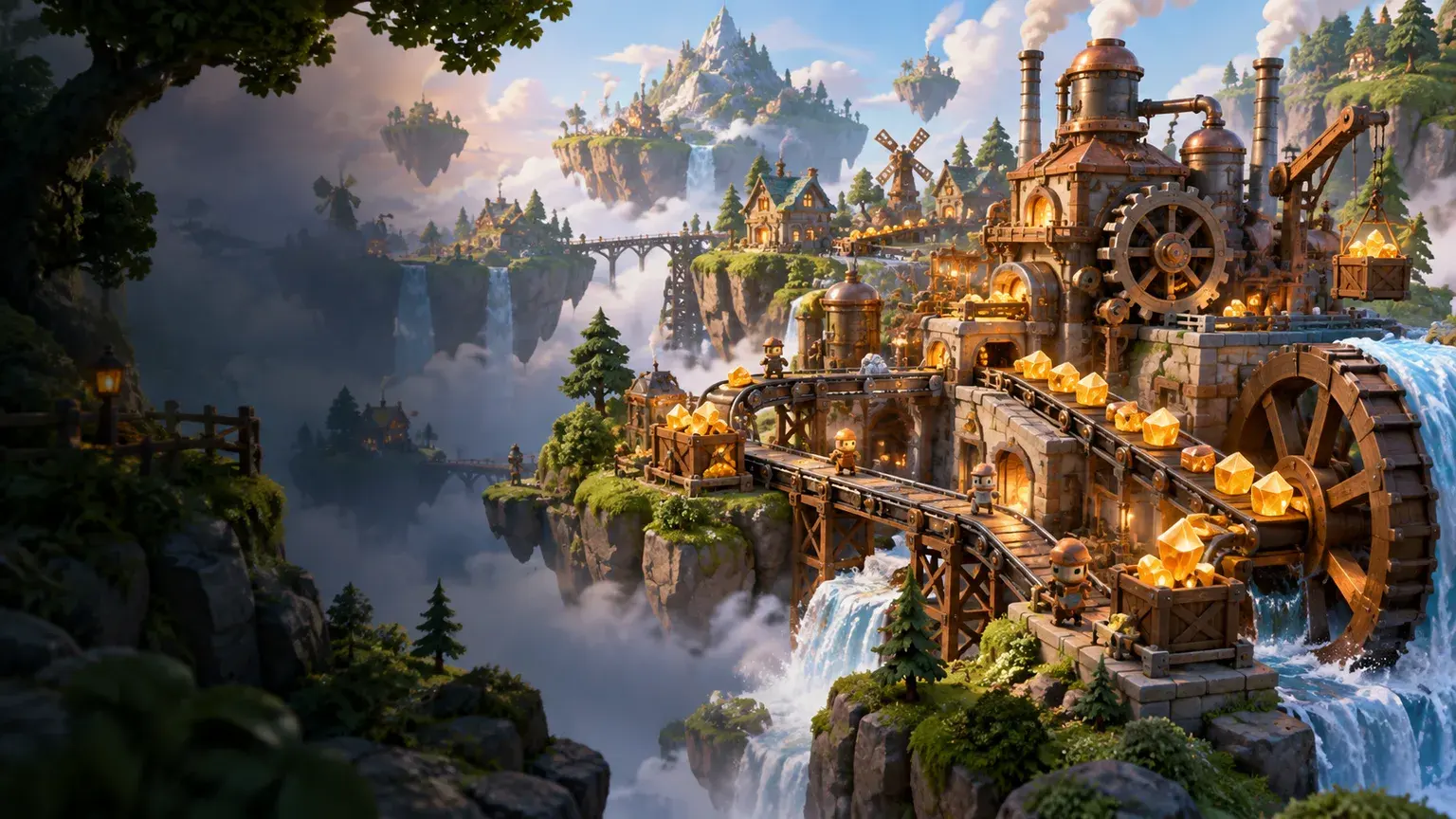
 Illustration
Create a tycoon game with AI
Let players turn a modest business into something of their own. Make the first sale, the next upgrade and the reason to expand understandable before adding a big management system.
Example prompts
Create a tycoon game where a robot opens a tiny café for travelers at a moon station. Let players tap to buy a drink machine, serve customers and choose between faster brewing or more seats. Show income and costs clearly, with a goal of earning enough to open a second counter.
Create a management game about running a small railway between three original towns. Let players assign one train to routes, collect fares and buy a second carriage or a faster engine. Use a clear top-down map and show travel times and upgrade costs before each choice.
Create a shop tycoon where a gardener buys and prices three types of miniature plants over five market days. Use click or touch controls to choose stock quantities and selling prices, then open the shop to customers with visible budgets and plant preferences. Higher prices earn more per sale but reduce demand, while unsold plants wilt overnight, so show wholesale costs and a profit summary before the next buying round. Aim to fund a second stall, with a small starter budget and a clear restart if the shop runs out of money.
Make your first playable version
Start with one sale
Name what the business sells, how customers arrive and what it costs to serve them. Make one complete earning loop work before adding more buildings.
Give upgrades a purpose
Describe the tradeoff behind each purchase: faster service, higher quality or more capacity. Show its cost and effect before the player buys.
Balance the early business
Test the first few minutes without bonuses. Check that prices, expenses and customer demand allow progress and that one mistake does not permanently end the game.
Questions before you create
How do I stop upgrades from feeling pointless?
Give each upgrade a visible change in the business and a clear benefit. Compare the time needed to afford it with how much it improves the next few sales.
Should everything run automatically?
Choose which decisions the player makes and which routine actions happen on their own. A small number of useful decisions usually works better than repeatedly clicking every customer.
Do I need to write code to start?
No. Describe your idea and PlayDrop builds a first playable version in Studio. Play it, then describe the next change you want.
Do I need an account, and what does creating cost?
You sign in before creating. Creation and revisions use credits, and the composer shows the cost before you confirm. Inserting an example only fills the composer; nothing starts until you submit.